
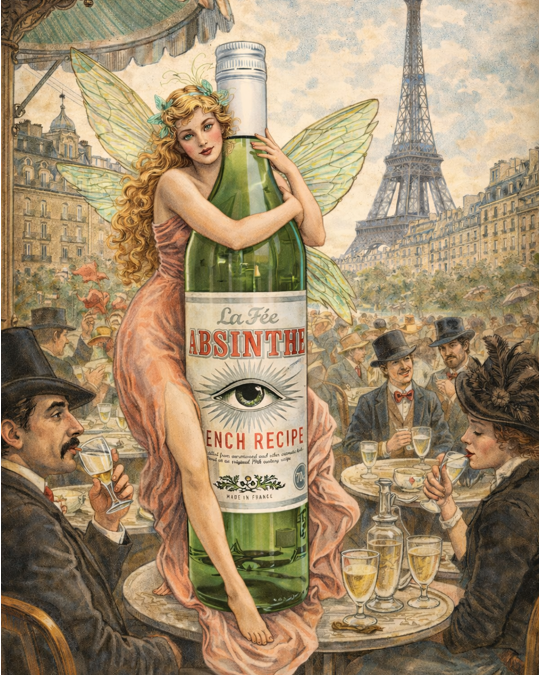
World Absinthe Day – The Return of the Green Fairy
Every year on 5 March, absinthe enthusiasts around the world raise a glass to celebrate World Absinthe Day, a tribute to one of the most fascinating spirits ever created.
Few drinks have experienced a journey as dramatic as absinthe. It rose to extraordinary popularity during the nineteenth century, became the drink of artists and writers across Europe, was blamed for social problems and moral decline, banned across much of the world for nearly a century, and ultimately returned through scientific understanding and regulatory clarity.
Today absinthe is once again produced legally across Europe, the United States and many other markets. Its revival represents not simply the return of a historic spirit, but also the triumph of science, regulation and historical authenticity over myth.
World Absinthe Day celebrates that remarkable journey.
To understand why the day matters, we must first understand how absinthe became one of the most legendary spirits in history.
The Birth of the Green Fairy
Absinthe originated in the late eighteenth century in Switzerland before becoming widely popular in France during the early nineteenth century.
The drink is traditionally distilled from alcohol infused with botanicals, most importantly:
- Grand Wormwood (Artemisia absinthium)
- Green and Star Anise
- Fennel
Outside of these main three recipes varied such as additional herbs such as hyssop, lemon balm and coriander often contribute complexity to the final spirit.
The resulting drink traditionally bottled @68%abv or between 60% and 72% ABV and traditionally served diluted with cold water. As water is slowly added through sugar, essential oils from the botanicals emulsify and create the famous louche effect, the transformation of clear emerald spirit into a cloudy, opalescent drink.
This visual transformation, combined with absinthe’s distinctive colour, aroma and flavour, helped create the mystique surrounding the drink. Most Absinthe served pre ban was Verte (Green).
By the mid-nineteenth century absinthe had become deeply embedded in French café culture. The ritual of drinking absinthe l’heure verte, or “the green hour” became a daily tradition.
Absinthe and the Artists of the Belle Époque
During the late nineteenth century absinthe became closely associated with the artistic communities of Paris.
Writers, painters and musicians were drawn to the drink and its ritual. Among the most famous figures associated with absinthe were:
- Charles Baudelaire
- Arthur Rimbaud
- Henri de Toulouse-Lautrec
- Oscar Wilde
- Ernest Hemingway
Absinthe also appeared frequently in art and literature of the period. One of the most famous examples is Edgar Degas’ 1876 painting L’Absinthe, which captured the atmosphere of Parisian café life.
By the early twentieth century absinthe had become one of the most widely consumed spirits in France. Estimates suggest that by 1910 France consumed around 36 million litres annually.
But popularity often attracts criticism.
Absinthe soon became the target of political and social movements that would reshape its history.
The Absinthe Controversy
By the late nineteenth century Europe was experiencing growing temperance movements and increasing concern about alcohol consumption.
Absinthe, with its striking colour and strong flavour, became an easy target.
Critics claimed that absinthe caused hallucinations, madness and social decline. Much of this fear centred on thujone, a naturally occurring compound found in wormwood.
At the time, thujone was believed to be responsible for the supposed psychoactive effects of absinthe. However, scientific understanding of thujone during this period was extremely limited.
Modern research has demonstrated that many of the claims made against absinthe were exaggerated or based on flawed experimental evidence.
Nevertheless, public concern continued to grow.
Economic factors also played a role. The French wine industry had been severely damaged by the phylloxera epidemic, and many wine producers viewed absinthe as a powerful competitor.
Together these pressures created the conditions that ultimately led to prohibition.
The Global Absinthe Ban
Between 1908 and 1915, a series of national bans spread across Europe and North America.
Key milestones included:
- 1908 – Switzerland votes to ban absinthe in a national referendum
- 1910 – Swiss prohibition comes into force
- 1912 – The United States restricts absinthe through Food Inspection Decision 147
- 1915 – France bans the manufacture and sale of absinthe
By 1915 absinthe had effectively disappeared from most major markets.
The prohibition did not always target wormwood itself, but rather the name and identity of absinthe. Drinks such as vermouth and bitters, which also contained some wormwood, continued to be produced legally.
In Switzerland, small quantities of illicit absinthe continued to be distilled secretly in the Val-de-Travers region, often referred to as La Bleue. These were typically Blanche (white) absinthes, making them harder for authorities to identify than the traditional green styles.
For the most part, however, the Green Fairy had vanished.
For nearly a century absinthe survived only as legend.
Science Revisits the Green Fairy
In the late twentieth century, researchers began to re-examine the chemistry of historical absinthe.
In 1998 I began conducting early testing on thujone levels in absinthe through Bohemian Beer House Ltd / Green Utopia Ltd, analysing recipes and production methods using modern laboratory techniques in collaboration with the Chemical and Technical University of Prague.
The results were revealing.
Authentic pre-ban absinthe contained far lower levels of thujone than previously believed, often well within limits considered safe under modern food safety standards, as demonstrated through analysis of La Fée Parisienne Absinthe Supérieure.
Modern research has shown that traditional absinthe contains only very small quantities of thujone. The character of the spirit instead comes from the complex interaction of its botanicals — wormwood, fennel, anise and other herbs used by individual distillers.
The distinctive effect and experience of absinthe arises not from a single compound, but from the combination of botanicals, the alcoholic base, and the traditional method of serving with sugar and water, which together release aromatic compounds and flavours as the drink louche’s.
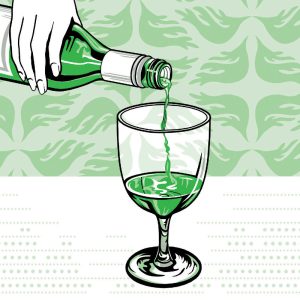
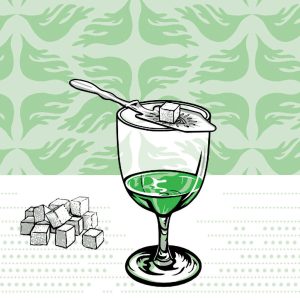
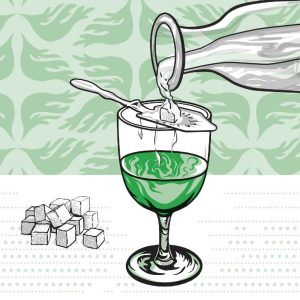
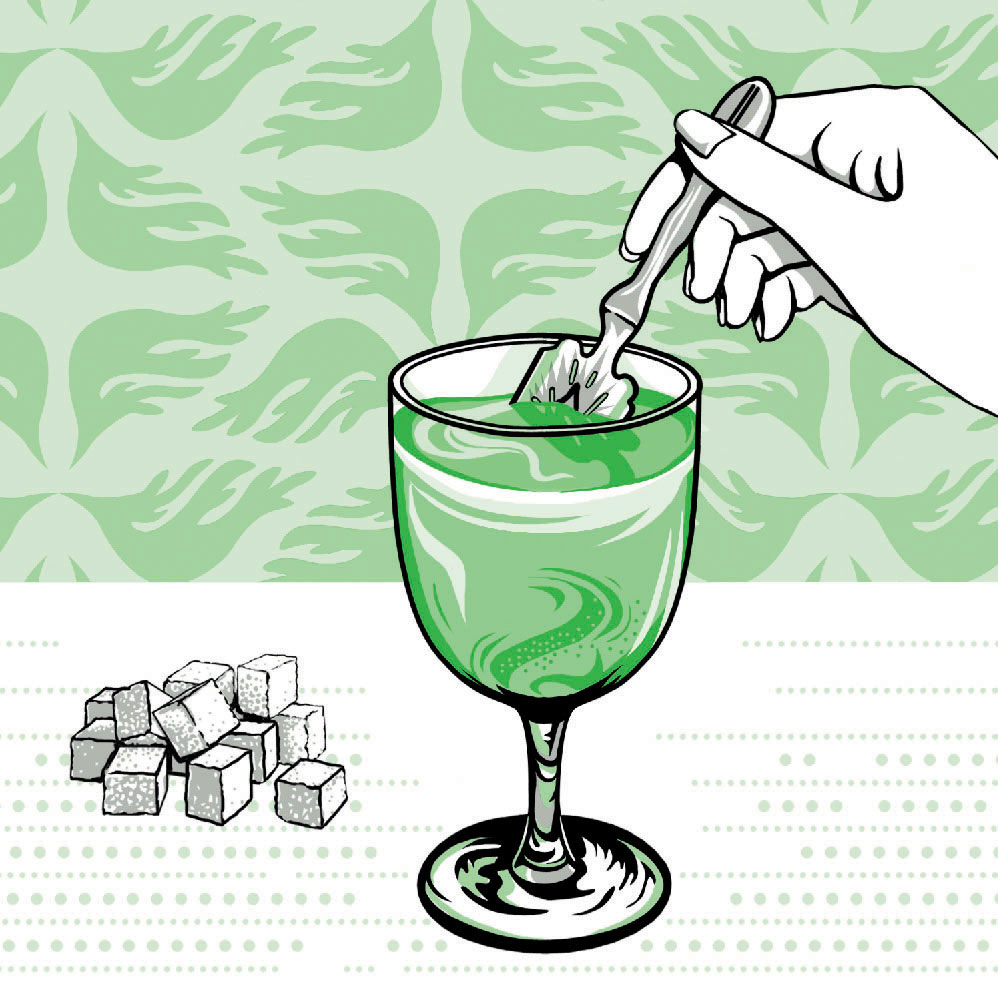
Traditionally bottled at around 68% ABV, absinthe is served diluted with cold water. As water is added, essential oils create the famous louche, releasing layers of aroma and flavour.
At the same time, regulatory frameworks in Europe were evolving.
The European Regulatory Turning Point
In 1988, the European Community introduced legislation regulating thujone levels in food and beverages.
Rather than banning wormwood, the directive simply established maximum permitted levels:
- 10 mg/kg (10 ppm) of thujone in alcoholic beverages generally
- 35 mg/kg (35 ppm) in bitter beverages derived from Artemisia species
Traditional absinthe such as La Fée Absinthe Supérieure fits within these limits.
In 1998, I evaluated this directive and demonstrated that absinthe could again be produced and consumed within existing European regulatory guidelines.
In practical terms, this meant authentic absinthe could legally exist once more under European food safety law.
This regulatory clarification reopened the door to absinthe’s return.
The Modern Absinthe Revival
During the 1990s, absinthe began to reappear in markets where it had never been formally banned, including the United Kingdom. Interest in the spirit grew rapidly.
By 2000, commercial absinthe distillation resumed in France for the first time since the early twentieth century. This work was undertaken by Marie-Claude Delahaye, founder of the French Absinthe Museum, together with me, working with the distillery Suprex.
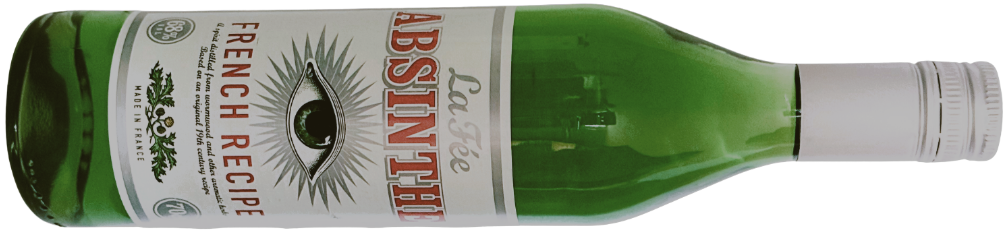
La Fée Absinthe helped initiate the French revival, bringing traditional French absinthe distillation back into lawful commercial production under the supervision of French Customs (DGDDI) Direction Générale des Douanes et Droits Indirects).
To this day, each distillation of La Fée Parisienne and La Fée Blanche is taste tested by Marie-Claude Delahaye and myself prior to authorising bottling in Paris.
This marked a major milestone in absinthe’s modern history.
The Green Fairy was returning.
Absinthe Returns to the United States
For decades absinthe had remained effectively prohibited in the United States due to restrictions relating to wormwood and thujone.
Gradually, regulatory understanding evolved.
In 2007, the United States approved the sale of absinthe that met established thujone limits.
This marked the first legal return of absinthe to the American market in nearly 95 years.
The reintroduction received widespread media attention and helped re-establish absinthe as a legitimate historic spirit.
Bartenders and cocktail historians played an important role in this revival, rediscovering classic recipes that had once relied on absinthe.
France Welcomes Absinthe Home
The final symbolic step came in 2011, when France repealed the original 1915 law that had prohibited absinthe by name.
Part of the urgency surrounding this change arose from developments in Switzerland, where producers were exploring stronger geographical protection for absinthe associated with the Val-de-Travers region. Under the EU Switzerland agreements linked to the Maastricht framework, such protections could potentially have been recognised reciprocally within the European Union.
Concerned that this might restrict or complicate the future production of absinthe in France, Marie-Claude Delahaye and I met in Paris with the chair of the French Federation of Spirits (FFS) to highlight the risks this could pose to the French absinthe category.
The issue helped prompt renewed attention to the outdated 1915 prohibition, which no longer reflected modern European food and spirits regulations. The Swiss application was ultimately challenged and the historic French ban was removed from the statute books.
Since 2000, prior to this repeal, absinthe could technically be produced in France provided it complied with European regulations governing thujone levels. However, it could not legally be labelled simply as “absinthe” if sold within France.
As a workaround, producers used alternative descriptions. La Fée, for example, was labelled “Aux Plantes d’Absinthe” literally “with absinthe plants.”
In 2011, the French government finally removed the obsolete prohibition. Producers were once again able to label their spirits openly and simply as Absinthe.
For the country where the drink had once been a defining cultural icon of café society, this represented an important moment of historical closure.
After nearly a century of prohibition, absinthe had officially returned home.
Absinthe in Modern Cocktail Culture
Today absinthe is once again recognised as an important ingredient in classic cocktails.
Among the most famous drinks featuring absinthe are:
- The Sazerac
- Corpse Reviver No.2
- French Mojito
- Death in the Afternoon
Bartenders often use absinthe in small quantities to add aromatic complexity to cocktails, sometimes rinsing a glass with the spirit or using it as a base.
At the same time, the traditional absinthe ritual continues to be enjoyed by enthusiasts around the world.
The slow drip of water through an absinthe fountain, the louche forming in the glass, and the aroma of anise and wormwood rising from the drink remain part of one of the most distinctive rituals in the world of spirits.
Why We Celebrate World Absinthe Day
World Absinthe Day celebrates more than a drink.
It celebrates the rediscovery of history.
For decades absinthe was misunderstood and misrepresented. Myths about hallucinations and madness overshadowed the drink’s real cultural and scientific story.
Modern research has demonstrated that absinthe is simply a traditional botanical spirit, produced according to strict food safety standards and enjoyed responsibly like any other distilled beverage.
World Absinthe Day is an opportunity to recognise that journey here are the three key dates:
A] 21 July 1998
Regulatory foundation established for the commercial return of absinthe in Europe, laying the groundwork for its global resurgence.
B] 27 June 2000
Commercial absinthe distillation resumes in France for the first time since the 1915 prohibition.
C] 5 March 2007
Absinthe receives U.S. federal approval for compliant import and sale.
It honours the history of absinthe, the artists and bartenders who kept its legend alive, and the scientific understanding that ultimately allowed the Green Fairy to return.
Raise a Glass
The story of absinthe is one of the most remarkable in the world of spirits.
It is a story of creativity and controversy, prohibition and rediscovery, myth and science.
Today absinthe once again appears in bars, restaurants and homes across the world.
The Green Fairy has returned.
And on 5 March, enthusiasts everywhere raise a glass to celebrate that extraordinary journey.
Happy World Absinthe Day
Author: George Rowley
Founder of La Fée Absinthe and a primary participant in the modern revival of commercial absinthe production beginning in 1998, including the return of distillation to France in 2000.
© George Rowley, 2026.